
Random Video Chat Language Filter: How to Find Your Language Fast in 2026
Imagine spending twenty minutes on a random video chat platform only to discover your conversation partner speaks a language you don’t understand. The time wasted, the frustration built—it’s a common problem that language filters are designed to solve.
After testing language filtering features across dozens of video chat platforms during comprehensive platform reviews, I’ve learned that effective language selection can dramatically improve your experience. Here’s what you need to know about using these tools in 2026.
Table of Contents
- Why Language Filters Matter More Than You Think
- How Language Detection Technology Actually Works
- Which Platforms Handle Languages Best
- Common Language Filter Problems and Solutions
Why Language Filters Matter More Than You Think
When you’re looking for meaningful conversations on random video chat platforms, language compatibility isn’t just a convenience—it’s foundational to the entire experience.
Research published in Nature’s study on cultural communication demonstrates that linguistic similarity significantly influences cross-cultural interactions. Users who can communicate fluently report higher satisfaction, more authentic exchanges, and better overall platform experiences.
The reality is that without language filters, you’re essentially playing a lottery with every connection. Your odds of finding someone who speaks your language—and shares your interests—drop dramatically when platforms match users randomly without considering linguistic compatibility.
Language barriers create more than just communication friction. According to research on communication barriers, linguistic differences can lead to misunderstandings, frustration, and ultimately shorter session times that leave both parties dissatisfied.
The best video chat platforms now recognize that language filtering isn’t a luxury feature—it’s essential infrastructure for quality connections.
How Language Detection Technology Actually Works
If you’ve ever wondered how platforms determine which language you’re speaking, the answer lies in sophisticated machine learning algorithms that analyze your speech patterns in real-time.
Chrome’s Language Detector API documentation explains that modern language detection uses ranking models to determine which language is most likely used in given text. These systems analyze multiple signals simultaneously:
Vocabulary patterns. Different languages have distinctive word frequencies and common phrases. Detection systems learn these patterns by analyzing millions of text samples across languages.
Sentence structure. Grammar rules, word order, and syntax vary between languages. Machine learning models identify these structural differences to distinguish between similar languages.
Character and sound analysis. For languages with unique character sets or sound patterns, detection systems can identify the language based on these fundamental elements.
Confidence scoring. Advanced systems don’t just guess—they provide confidence levels for multiple potential languages. A piece of text might be 99% likely English, 0.4% likely Dutch, and 0.1% likely other languages.
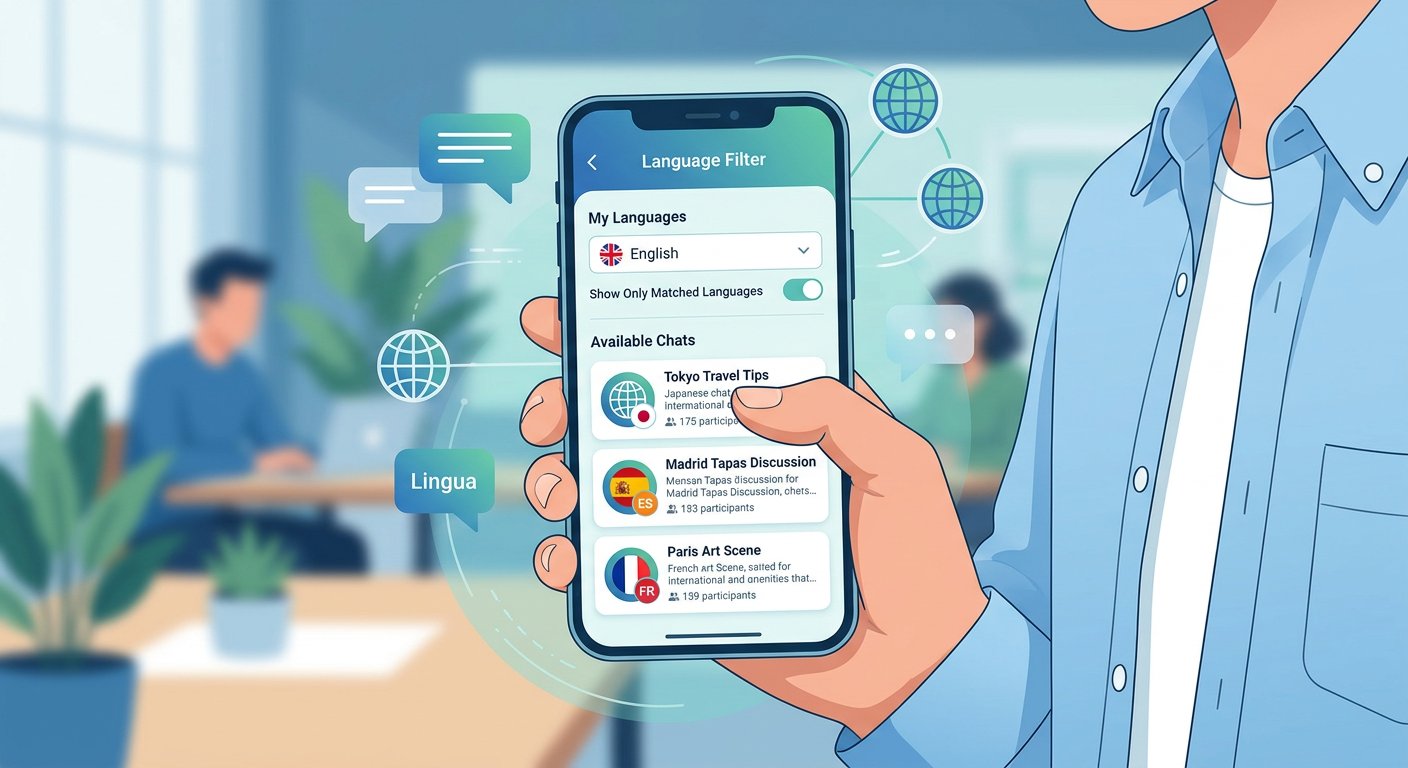
When you set a language filter on a video chat platform, you’re essentially telling the matching algorithm: “Show me users who have been detected speaking this language, or who have manually selected it as their preference.” The accuracy of this matching depends on how sophisticated the platform’s detection system is.
Which Platforms Handle Languages Best
Not all video chat platforms implement language filtering with the same level of sophistication. Here’s what I found after extensive testing:
Multi-language detection with manual override. The best platforms combine automatic language detection with user-controlled preferences. If the algorithm makes an error, users can manually select their preferred language, and future matches will prioritize that selection.
Regional dialect recognition. Some platforms distinguish between similar languages (Spanish from Spain versus Spanish from Mexico, for example) or regional dialects within a single language. This level of granularity significantly improves matching quality.
Spoken versus typed language. More advanced platforms can detect language from speech patterns, not just text input. This matters for video chat where you’re having verbal conversations, not reading text.
Translation integration. Some platforms offer real-time translation features that can help when language detection isn’t perfect. However, these features often require additional permissions and may affect privacy.
When evaluating platforms for safety and security features, I consider language filtering capabilities alongside privacy protections. The best platforms balance both.

Common Language Filter Problems and Solutions
Even with sophisticated language detection, you might encounter issues. Here’s how to address the most common problems:
Problem: Your language isn’t available in the filter.
Solution: Check if the platform supports regional variants or similar languages. Some platforms list “Spanish” broadly, while others offer “Spanish (Latin America)” or “Spanish (Spain)” as separate options. If your specific language isn’t available, look for platforms that prioritize linguistic diversity in their filtering options.
Problem: The detection system keeps misidentifying your language.
Solution: If the platform allows manual language selection, use that feature to override the automatic detection. Some users find that speaking more slowly or using more formal vocabulary helps detection algorithms identify their language more accurately.
Problem: You want to practice with native speakers of another language.
Solution: Look for platforms that allow “learning mode” or specify language exchange interests. These features match users who want to learn each other’s languages, creating mutually beneficial connections.
Problem: The filter works but connections still struggle.
Solution: Language detection identifies the primary language, but cultural context matters too. Some platforms offer additional filters for interests, age ranges, or communication styles that can improve the quality of matches beyond just linguistic compatibility.
Problem: Privacy concerns about language data collection.
Solution: Understand that any platform offering language detection processes some form of your communication data. Review the platform’s privacy policy regarding how language data is stored, shared, or used for other purposes. The privacy considerations for video chat platforms we covered earlier apply equally to language detection features.
Language filtering technology continues to evolve rapidly. The systems available in 2026 are dramatically more accurate than those from just a few years ago, and the trajectory suggests continued improvement.
Whether you’re looking to connect with people who speak your native language, practice a new language with native speakers, or explore international conversations across linguistic boundaries—effective language filtering makes these goals achievable.
For more on improving your video chat experience, explore our guide to finding platforms that match your needs and learn about features that matter beyond language selection.