
What Data Do Omegle Alternatives Collect? The Privacy Reality in 2026
Every time you open a random video chat platform, you’re making a deal you probably don’t fully understand. You’re getting instant access to connect with strangers around the world—but in exchange, these platforms are collecting data about you that can reveal more than you might expect.
I’ve spent years analyzing how video chat platforms handle user information, and what I found during security research on Omegle alternatives was sobering. The privacy reality is much darker than most users realize.
Table of Contents
- What Data Are These Platforms Actually Collecting
- The Hidden Ways Your Information Is Tracked
- Why This Matters More Than You Think
- How to Protect Your Privacy in 2026
What Data Are These Platforms Actually Collecting
The Federal Trade Commission’s comprehensive study on surveillance practices revealed that major platforms collect far more information than users typically understand. Video chat services are no exception to this pattern.
When you use a random video chat platform, here’s what’s typically being captured:
Device and technical information. Every connection logs your IP address, device type, browser specifications, and operating system details. This data can reveal your approximate geographic location and create a persistent fingerprint of your device.
Session metadata. Even when video content isn’t explicitly recorded, platforms track connection durations, chat patterns, interaction frequency, and behavioral signals. This metadata can paint a detailed picture of your habits and preferences.
Communication content. Depending on the platform’s architecture, text conversations may be stored on servers indefinitely. The assumption that video chats are ephemeral is often incorrect.
The Guardian’s analysis of FTC findings noted that companies engage in “vast surveillance of users” with business models that incentivize comprehensive data collection. Video chat platforms operate on similar principles.
The Hidden Ways Your Information Is Tracked
Beyond the obvious data points, modern platforms employ sophisticated tracking technologies that most users never see:
Behavioral profiling algorithms. Platforms analyze how you interact—which features you use, how long you stay, what triggers you to disconnect. This creates psychological profiles that can be shared with advertising partners or used to manipulate future interactions.
Cross-platform tracking. If you use multiple services from the same company or if platforms share analytics infrastructure, your profiles can be linked across different services. Your video chat habits might influence ads you see on completely unrelated websites.
Third-party data sharing. Privacy policies often include provisions allowing data sharing with “partners,” “affiliates,” or “service providers.” The actual recipients and their purposes are rarely clearly disclosed.
AI-powered moderation systems. Many platforms now use artificial intelligence to monitor content in real-time. These systems capture and analyze visual and audio data, often retaining samples for algorithm training purposes.
The CISA guidance on protecting yourself from tracking technologies emphasizes that users should assume their communications are at risk of interception. This applies equally to video chat platforms.
Why This Matters More Than You Think
You might be thinking, “So what? I’m just chatting with strangers. Who cares about my data?”
This thinking ignores several real risks that affect real people:
Accountability gaps. When platforms collect comprehensive data but don’t clearly explain retention policies, you have no way to know who might access your information years from now. The person you chat with today might be the employee reviewing your session history tomorrow.
Legal exposure. Law enforcement agencies can subpoena video chat platforms for user data. IP addresses and session logs have been used in criminal investigations and civil litigation. Your anonymous conversation might not be as anonymous as you think.
Data breach consequences. Platforms that store your information become targets for hackers. A breach exposing IP addresses, chat logs, and behavioral profiles could affect your privacy, employment, or relationships in ways you can’t predict.
Platform manipulation. When platforms understand your psychological triggers through behavioral profiling, they can manipulate your experience. Showing you certain types of users more frequently, adjusting match algorithms, or introducing “engagement features” designed to increase your time on platform—all based on data you didn’t know you were generating.
The Future of Privacy Foundation’s essential privacy protection tips emphasize that protecting your digital footprint requires active management of what you share and how you connect.
How to Protect Your Privacy in 2026
Understanding the risks is the first step. Taking action to protect yourself is the second. Here’s what actually works:
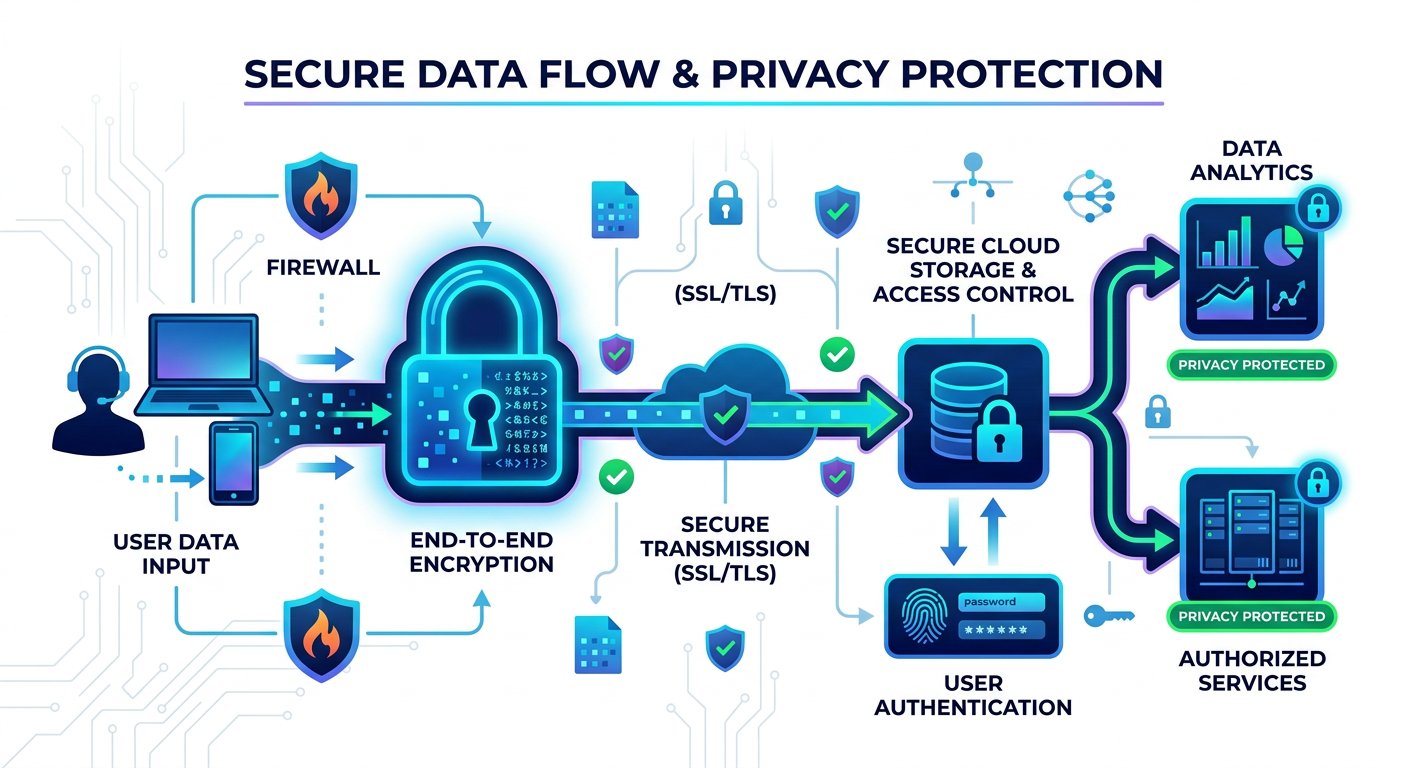
Use a quality VPN service. Your IP address is one of the most revealing pieces of information you share. A reputable VPN masks your real location and creates an additional layer of privacy between you and the platform. Look for providers with strict no-log policies and strong encryption standards.
Understand platform privacy policies. Before creating an account or engaging with any video chat service, spend time reviewing their privacy policy. Look specifically for sections on data retention, third-party sharing, and law enforcement cooperation. If these sections are vague or concerning, consider using a different platform.
Limit what you share. Be mindful of what appears in your video feed. Background elements, identifying objects, and even your face can be captured, analyzed, and stored. Consider what’s visible in your environment before starting a chat session.
Use privacy-focused browsers and devices. Browser fingerprinting can identify you even without cookies. Use privacy-focused browsers, regularly clear your cache, and consider using devices or configurations that reduce your digital footprint.
Regularly audit your privacy settings. Platforms update their policies and settings frequently. What was private last month might be shared this month. Make it a habit to review privacy settings on services you use regularly.
Consider the information you provide. Even basic account information can be revealing. Email addresses, usernames, and profile details all contribute to your digital identity. Use pseudonyms where possible and avoid connecting video chat accounts to primary email addresses.

The video chat landscape continues to evolve, and privacy practices vary significantly between platforms. The most important step you can take is to stop assuming that “anonymous” means “private.” Understanding what these platforms collect, how they use it, and who can access it is the foundation of making informed choices about where and how you connect online.
For more on staying safe while using video chat platforms, explore our complete guide to platform security and learn how to identify safer alternatives that respect user privacy. You can also review our comprehensive safety checklist for video chats.