What to Do When Private Images Are Shared Without Consent
Nonconsensual Intimate Images: A Step-by-Step Removal Guide
Finding an intimate image of yourself online without permission can feel overwhelming. You may want to delete everything immediately, confront the person who posted it or search for every copy at once.
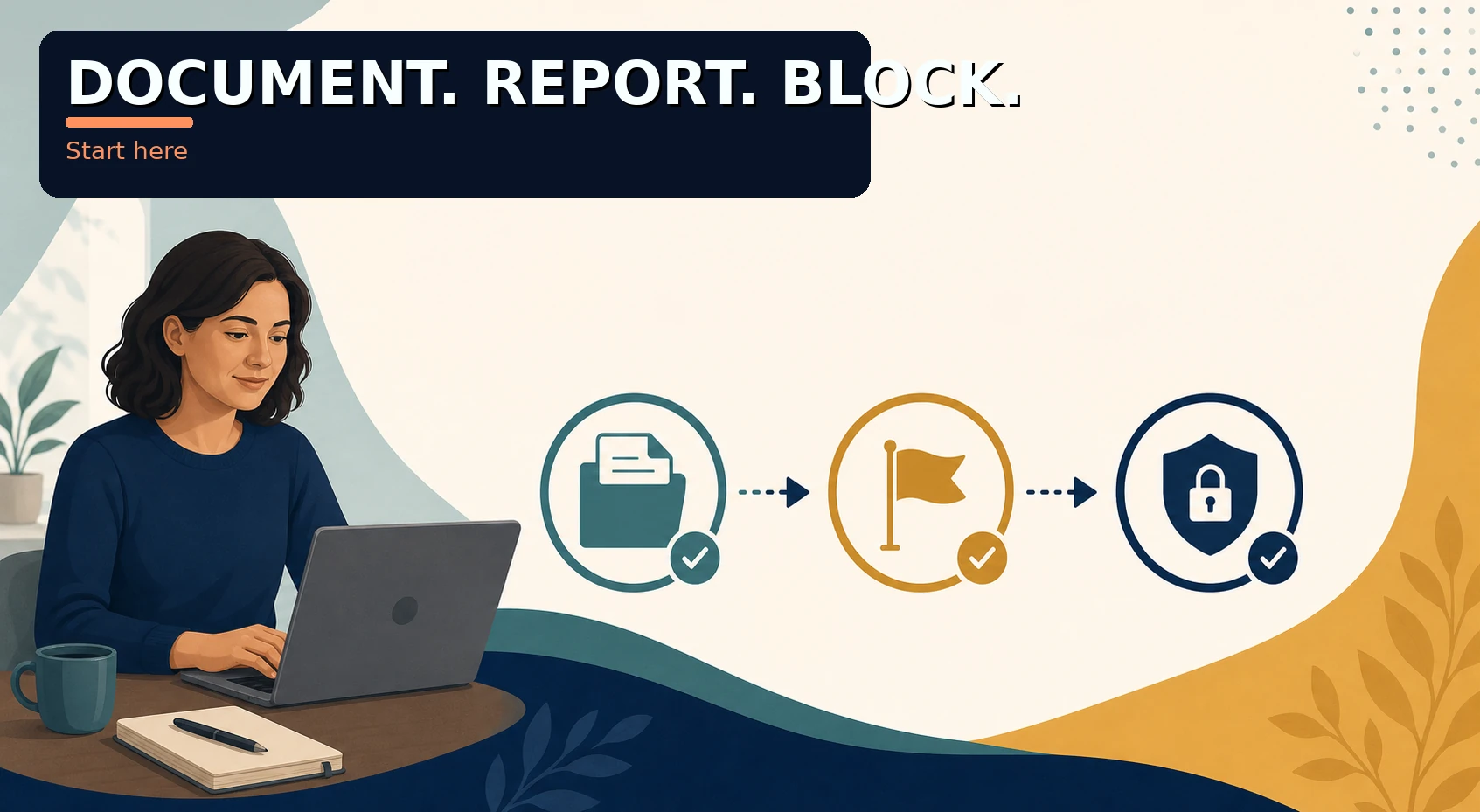
Start with a calmer sequence. Preserve only the information needed to report the content, contact the original platform, use specialist tools and protect your accounts. You do not need to view, download or share the material again to prove what happened.
This guide is for adults. It is educational information, not legal advice. Laws, deadlines and reporting options vary by country. If you are in immediate danger, contact local emergency services or a qualified support professional.
Sharing an image privately is not permission for someone else to publish, forward, sell or threaten you with it.
What image-based abuse means when a private image is shared
Image-based abuse includes intimate photos, videos or digitally altered material shared without the consent of the person shown. It can involve an ex-partner, a stranger, a hacked account, a hidden recording or an AI-generated fake.
The key issue is consent to the distribution. Agreeing to create an image, send it privately or appear on a webcam does not automatically mean agreeing to public posting or redistribution.
Do not blame yourself for trusting someone or using a camera. Responsibility belongs to the person who shared or threatened to share the material without permission.
What to do in the first 30 minutes after discovering the content
- Stop direct contact. Do not negotiate with the person, send money or provide more material.
- Preserve basic evidence. Save the page URL, username, date, time and messages if you can do so safely.
- Report the original post. Use the platform’s specific option for nonconsensual intimate imagery or privacy abuse.
- Secure your accounts. Change reused passwords and enable two-factor authentication.
- Ask for support. A trusted person can help document links and submit forms while you step away.
Do not download copies or forward them to friends. If evidence is necessary, screenshots of the page, URL and report confirmation may be enough. Avoid collecting more intimate material than you need.
How to document the abuse without spreading it further
Keep a private incident log. Record the platform, account name, URL, date, time, threats and report number. Store it in a secure location rather than an easily shared public folder.
If a friend helps you, ask them not to forward the content or save it to their own device. You can share the URL and reporting instructions instead of distributing the image itself.
If the material is on a site that asks you to upload more images, provide identity documents or pay for “instant removal,” pause. A removal service should explain its process, privacy handling and fees clearly. No legitimate helper needs a fresh intimate image as proof that you were harmed.
How to report intimate images to the original platform
Reporting the source is usually the first removal route. Open the post, profile or page menu and look for categories such as privacy violation, nonconsensual intimate imagery, sexual exploitation or harassment.
Describe the problem in plain language: you are the person depicted, you did not consent to public sharing and you want the content plus known copies removed. Include the exact URLs and any report reference number.
The FTC’s image-based abuse guidance explains the reporting process and distinguishes adult resources from services intended for minors. Rules and legal deadlines depend on the platform and your location, so avoid copying a U.S. process as universal legal advice.
The site’s own Safety Center can be used as a starting point for platform reporting and privacy information.
How StopNCII creates a hash without uploading the image
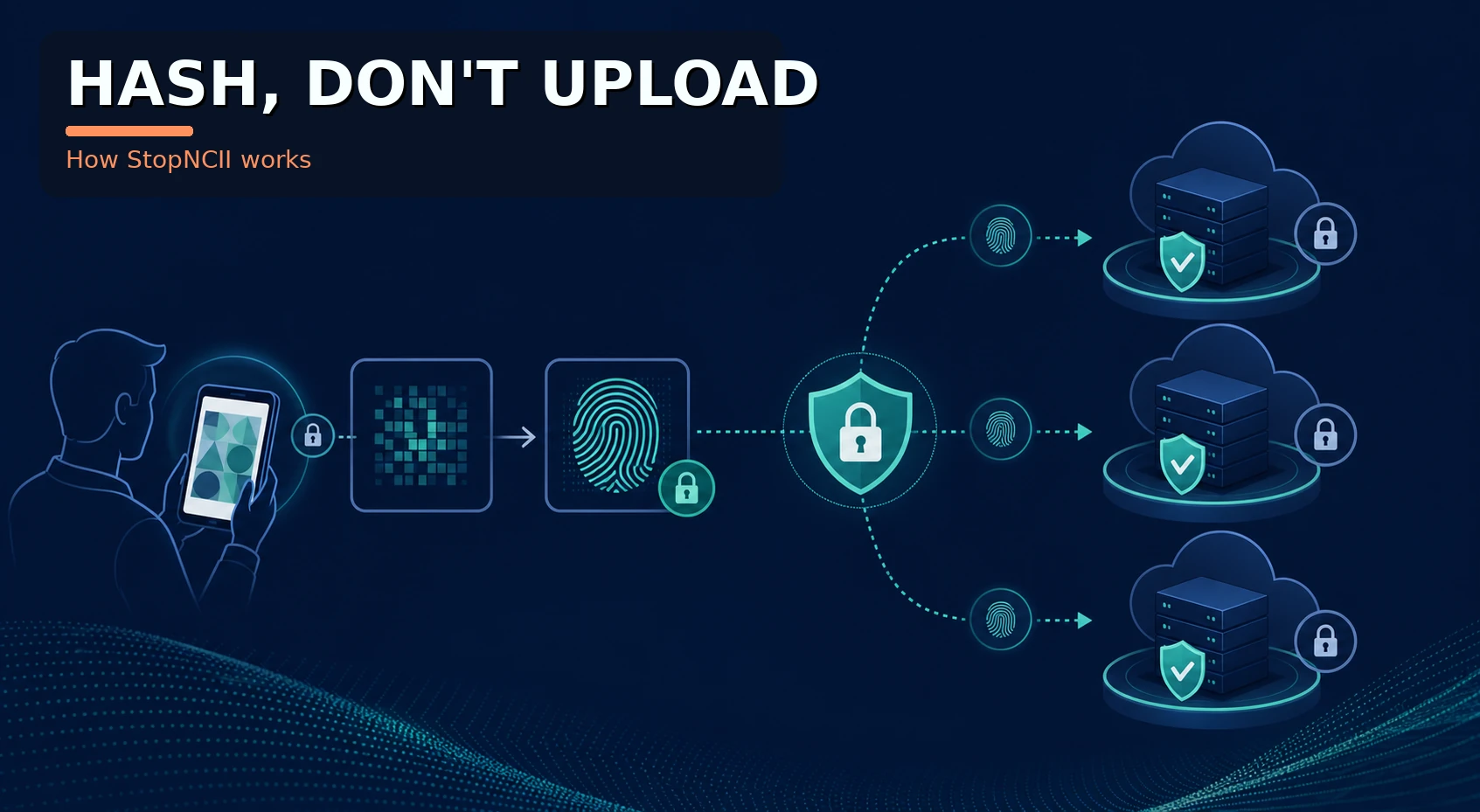
StopNCII is designed for adults who have access to the intimate image or video. It creates a digital fingerprint, called a hash, on your device. Participating platforms can compare that fingerprint against uploads and act when a match violates their rules.
The original file is not sent to StopNCII as part of the hashing process. The tool does not cover the entire internet, and it cannot remove content from every website, encrypted service or unparticipating platform.
Use the official StopNCII explanation to check eligibility, participating platforms and current steps. Keep your case number and PIN secure if you create a case.
What to do if someone demands money or threatens to publish
Do not pay and do not send more images. Payment does not guarantee deletion, and it can encourage further demands. Stop responding, preserve the messages and report the account or platform.
Threats can be a form of blackmail or sextortion. The legal response depends on your country, the platform and the facts. Contact local law enforcement or a specialist support organisation if you feel threatened.
If the person claims they can remove the content for a fee, verify who they are independently. Scammers often target people who are already distressed and promise secret access, hacking or guaranteed results.
When a DMCA request may help with removal
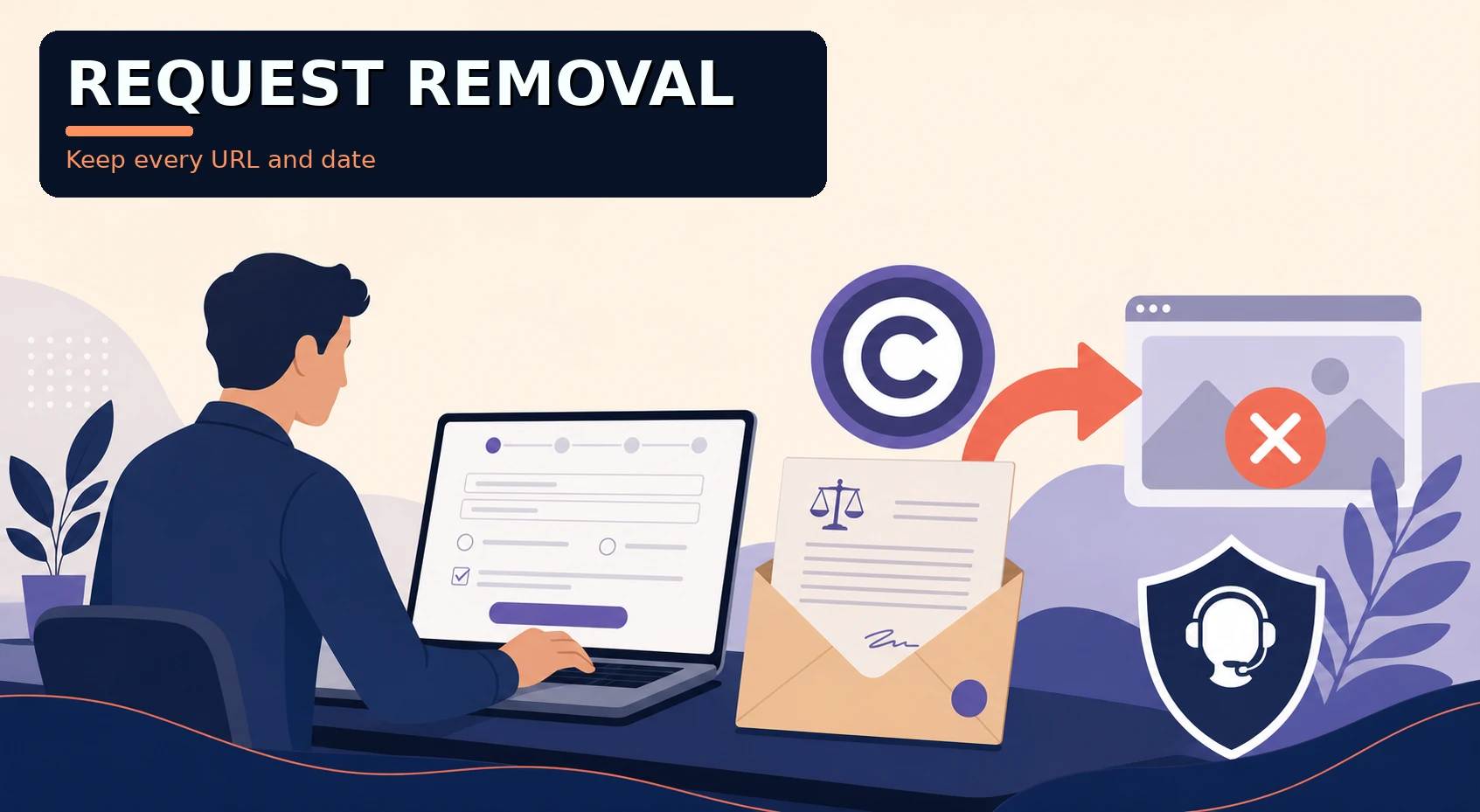
If you created the image or video yourself, you may own copyright in the original work. A DMCA notice can be one possible route in jurisdictions and situations where it applies. It does not replace a privacy or nonconsensual-image report, and it is not a universal solution.
Use the site’s DMCA policy for the correct contact route. Do not make false copyright claims for material you do not own. If the situation is complex, speak with a lawyer or an image-abuse support organisation in your country.
What each recovery step can and cannot do
| Action | Can help with | Cannot guarantee |
|---|---|---|
| Platform report | Removal from the original service and action against the account. | Removal from every repost or private message. |
| StopNCII | Detecting matching uploads on participating platforms. | Removing content from the whole internet. |
| Google removal request | Reducing visibility in Google Search results. | Deleting the source page itself. |
| DMCA notice | Addressing copyright infringement when you own the work. | Replacing a privacy report or applying in every country. |
| Account security | Reducing further access to your email and social profiles. | Undoing an image that has already been copied. |
Common mistakes after nonconsensual intimate images appear online
- Paying a stranger who promises guaranteed deletion.
- Sending more images to prove identity or negotiate.
- Arguing publicly with the account that posted the material.
- Deleting all evidence before recording URLs and report details.
- Searching for more copies and repeatedly exposing yourself to the content.
- Using a fake takedown service that asks for passwords or identity documents.
- Assuming search-engine removal deletes the original website.
Move deliberately. Ask a trusted person to help with the repetitive steps so you do not have to handle every report alone.
How to secure your accounts after image-based abuse
- Change your email password first, then other reused passwords.
- Enable two-factor authentication with an authenticator app where possible.
- Review active sessions and sign out unknown devices.
- Make social profiles private and remove public location details.
- Check recovery email addresses and phone numbers.
- Warn close contacts not to open suspicious links sent in your name.
Keep a copy of the incident log, but do not keep intimate material in an unprotected shared folder. The site’s Privacy Policy explains the site’s data practices separately from the steps you need to take on other services.

FAQ: removing intimate images shared without consent
What should I do first?
Stop contact, preserve URLs and report the content to the platform where it appears. Ask someone you trust to help if the process feels overwhelming.
Does StopNCII remove images from every website?
No. It works with participating platforms that compare hashes. It is one step in a wider removal plan, not a universal internet deletion service.
Should I contact the person who posted the image?
Usually no, especially if they are threatening you. Do not negotiate or pay. Preserve evidence, block the account and use platform or professional support.
Can I report a deepfake?
Yes. Real and AI-generated intimate imagery can be reported when it depicts you and was shared without consent. Use the platform’s current reporting process.
Where can I find the correct legal process?
It depends on your country. Use a qualified lawyer, local support organisation or law-enforcement service for advice specific to your situation. For site-specific reporting questions, consult the FAQ.